




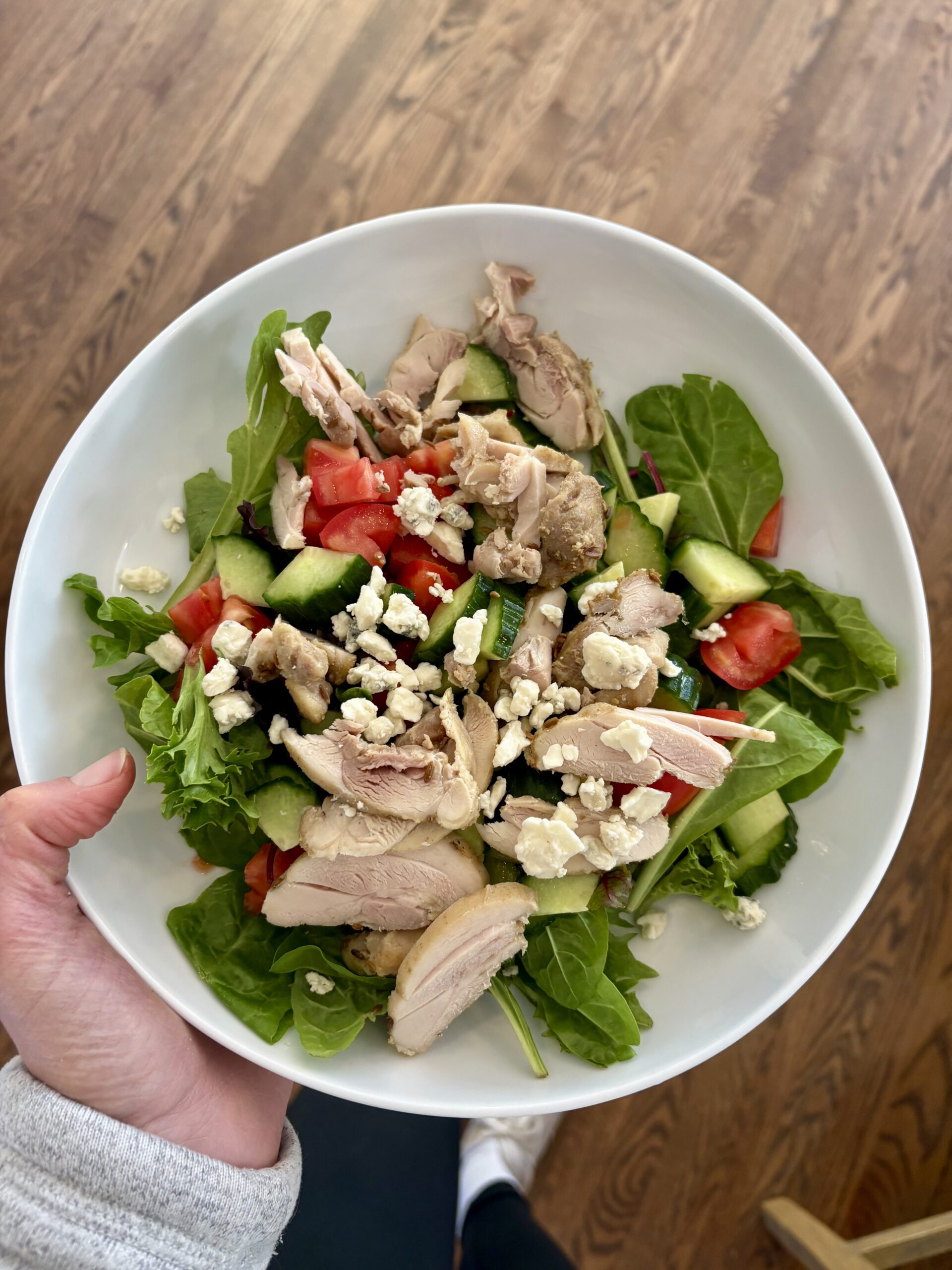
5 Ways to Keep GLP-1 High after Tapering
If you’ve ever felt confused by your appetite—too hungry, not hungry enough, or way hungrier after stopping GLP-1 medications—you’re not alone.
GLP-1 isn’t just a medication.
It’s actually a hormone your body produces naturally, primarily in the gut, and it plays a major role in appetite regulation, blood sugar control, insulin levels, and fullness.
What many people don’t realize is that everyday dietary and lifestyle habits can quietly suppress natural GLP-1 production. I didn’t fully appreciate how powerful this was until I began changing these habits—both personally and in my work with clients.
Here are the five biggest factors I see interfering with natural GLP-1 signaling—and what to do instead.
1. Eating Too Little Protein
For a very long time the USDA recommended 0.8g of protein for Kg body weight. While this is enough to stave off protein deficiency, it is not enough to optimize health. In fact, the dietary guidelines just bumped the recommendation to 1.2-1.6g/kg body weight. That’s a serious increase (50-100%!), and for good reason. Protein happens to be one of the strongest dietary stimulators of GLP-1 release.
When protein intake is consistently low:
- Fullness signals are weaker
- Gastric emptying is faster
- Hunger returns sooner after meals
This is especially common among women, people with low appetite on GLP-1s, or those transitioning off medication.
What helps:
Aim to include a meaningful protein source at each meal—even if portions are small.
Let’s do the math for a woman that weights 150lbs. 150/2.2= 68kg
68×1.2=82g protein per day
68×1.6=109g protein per day
So for this theoretical person, she should aim to get 25-30g per meal if eating 3 meals per day.
Consistency is key.
2. Not Eating Enough Fiber
GLP-1 is released by specialized cells in the gut (L-cells) that respond to fermentation byproducts from fiber called short chain fatty acids (SCFAs). You have to love those gut bugs! They do SO much for us!
Low fiber intake can lead to:
- Reduced gut hormone signaling
- Lower microbiome diversity (less of those healthy gut bugs)
- Weaker satiety after meals
Ultra-processed foods are often marketed as “high protein” but still lack the fiber needed to support gut-based GLP-1 production. Ideally, we want to get both in our meals and snacks. And ideally, we want to get protein from whole food sources. Think sliced chicken breast and an apple over a protein bar. Your body knows better how to metabolize and use food in its original packaging.
What helps:
Prioritize plant variety—vegetables, beans, oats, berries, nuts, and seeds. Think “add,” not restrict.
3. Living in a State of Chronic Stress
Even well-managed, high-functioning stress (eustress) impacts appetite hormones.
Chronically elevated cortisol:
- Blunts GLP-1 signaling (cells are less responsive)
- Interferes with insulin sensitivity (cells are less likely to take up glucose from the blood)
- Alters gut motility and digestion
This is one of the most overlooked contributors to appetite dysregulation.
What helps:
Gentle nervous system support—walking, breathwork, adequate fuel, and realistic expectations around productivity. In other words, drop the go-go-go mentality. The body needs time for rest as well.
4. Not Getting Enough Sleep
I cannot express enough how critically important quality sleep is and how chronically my clients suffer from lack of it.
Sleep deprivation affects hunger hormones almost immediately and makes us crave carbohydrates and not the good fiber rich types.
Even short-term sleep loss can:
- Reduce GLP-1 secretion
- Increase hunger and cravings
- Impair blood sugar regulation
This often shows up as increased appetite the following day, independent of food choices. There is tons of research to show that the less sleep we get, the more we tend to eat.
What helps:
Consistent sleep timing, morning light exposure (to help set our circadian rhythm), and reducing late-night stimulation when possible.
5. Not Building or Maintaining Muscle
Muscle plays a critical role in glucose disposal and metabolic signaling. Less muscle means a lower metabolism, so we want to do everything possible to hold onto our muscle mass and if possible, build more. And ladies, you do not have to worry. Resistance training 3x per week will not make you look like a body builder. It will make you toned and healthy.
Low muscle mass and inactivity are associated with:
- Reduced insulin sensitivity (again, cells aren’t taking up glucose increasing risk of high blood sugar levels)
- Lower post-meal GLP-1 response (we are less satisfied from meals)
- Less total caloric burn over the course of the day (simply because muscle is more metabolically demanding than other tissues)
You don’t have to do intense workouts to take care of your muscles.
What helps:
Regular resistance-based movement—bands, weights, bodyweight exercises—paired with adequate fuel and PROTEIN.
This Isn’t a Willpower Problem
When GLP-1 signaling is suppressed, hunger feels louder and fullness feels harder to reach. That doesn’t mean your body is broken.
It means your physiology needs support.
This is particularly important for individuals tapering off GLP-1 medications. Appetite returning is expected. What determines long-term success is how well gut health, muscle, stress, and nutrition are supported during the transition.
The Takeaway
GLP-1 is highly responsive to lifestyle inputs.
Small, consistent changes can meaningfully improve your body’s ability to regulate appetite naturally.
If you’re navigating GLP-1 use, tapering, or rebuilding trust with hunger cues, a personalized, gut-centered approach matters.
Want Support?
I help women successfully transition off GLP-1s through nutrition, gut health, and sustainable habits—without extreme restriction.
👉 Explore working together | Book a discovery call


leave a comment